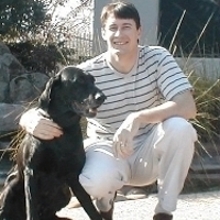
Michael Eichholz
Dr. Eichholz is a waterfowl/wetland ecologist in the Cooperative Wildlife Research Laboratory and Assistant Professor in the Zoology Program, Southern Illinois University.
Education
- Ph.D.,University of Alaska
Courses Taught
- Zool 585D
Areas of Interest
- Waterfowl, Wetland Ecology
Research:
His past and current research involves studies addressing the importance of nutrient reserves to clutch size and incubation constancy of Black Brant nesting on the west coast of Alaska, the role of agricultural development in nutrient dynamics and population regulation of Canada geese staging in Interior Alaska, food availability and optimal foraging strategy of waterfowl in moist soil habitats and rice fields in the Central Valley of California, and the development of a technique using postovulatory follicles to estimate breeding propensity in wild populations of waterfowl. He is interested in continuing to investigate the influence of nutrient availability on vital rates and the development of life history traits and the relative influence of vital rates on waterfowl population demography.
Selected Recent Publications:
Ryan, M. J., K. R. Lips, M. W. Eichholz. 2008. Decline and extirpation of an endangered Panamanian stream frog population (Craugastor punctariolus) due to an outbreak of chytridiomycosis. Biological Conservation.
Eichholz, M.W., J. S. Sedinger. 2007. Survival and recovery rate of Canada Geese staging in Interior Alaska. Journal of Wildlife Management71: 36-42.
Eichholz, M.W., J. S. Sedinger. 2007. Staging, migration, and winter distribution of white-cheeked geese staging in Interior Alaska. Journal of Wildlife Management70: 1308-1315
Naylor, L. W., Eadie, J. M., Smith, W. D., Eichholz, M.W., M. J. Gray. A simple method to predict seed yield in moist soil habitats. Wildlife Society Bulletin.
Lindstrom, E.B., Eichholz, M.W., Eadie, J. M. 2006. Postovulatory follicles in Mallards: Implications for estimates of breeding propensity. Condor108: 925-935.